

Acupuncture and chiropractic treatment for horses
Horses are where everything started for me. Backed by specialist training in Germany and international FEI accreditation a having worked at events like Burghley, Badminton and Aachen, Chirovet Kent Limited offers expert acupuncture, chiropractic treatment and Chinese Veterinary medicine to optimize your horses performance and comfort across Kent and the Southeast.
Competition horses taking part in a wide range of disciplines are prone to developing minor injuries that often go unnoticed. Eventually these build up and cause the horse to compensate by altering its way of moving and this makes it susceptible to more serious injury. Acupuncture for horses can be a huge benefit to providing treatment to their underlying issue. Find out more about our veterinary acupuncture services here.
What conditions can acupuncture be used for with horses?
Acupuncture for horses can be used as part of a treatment protocol for almost any medical condition with very little exception. It is often used in combination with conventional veterinary treatment so the patient experiences the benefits of the combined effects.
In equine practice, acupuncture is commonly used together with chiropractic for the relief of musculoskeletal pain. It is especially useful for treating:
- Any type of muscle soreness, particularly of the neck, shoulders, back and hindquarters.
- Cold backs – resentment of saddling and girthing, dipping on mounting
- General stiffness, inability to bend on one or both reins
- Head tilt, inability to flex from the poll
- Shortness of stride, not going forward from the leg
- Disunited or bunny-hopping at canter
- Moving un-level behind
- ‘Hopping’ on the transition from walk to trot
- Bucking on the transition from trot to canter
- Irritability and soreness during grooming
- Arthritis
- Sacroiliac pain
- Headshaker syndromes.
Acupuncture is also used to influence the function of internal organs:
- Respiratory problems
- Dermatological problems
- Gynaecological problems in mares, including infertility
- Poor immunity and post viral lethargy
- Digestive problems including loss of appetite, diarrhoea and some types of colic
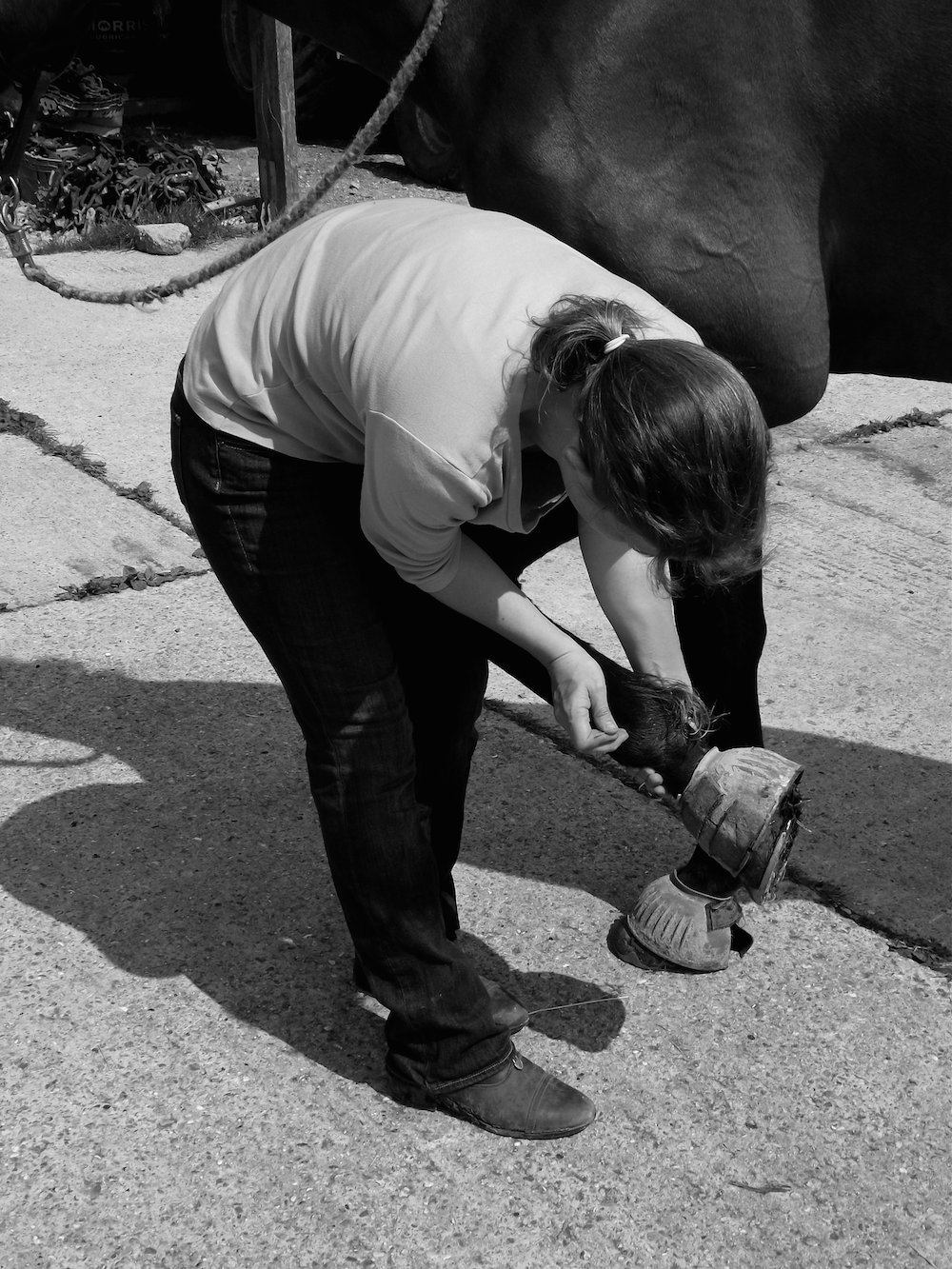
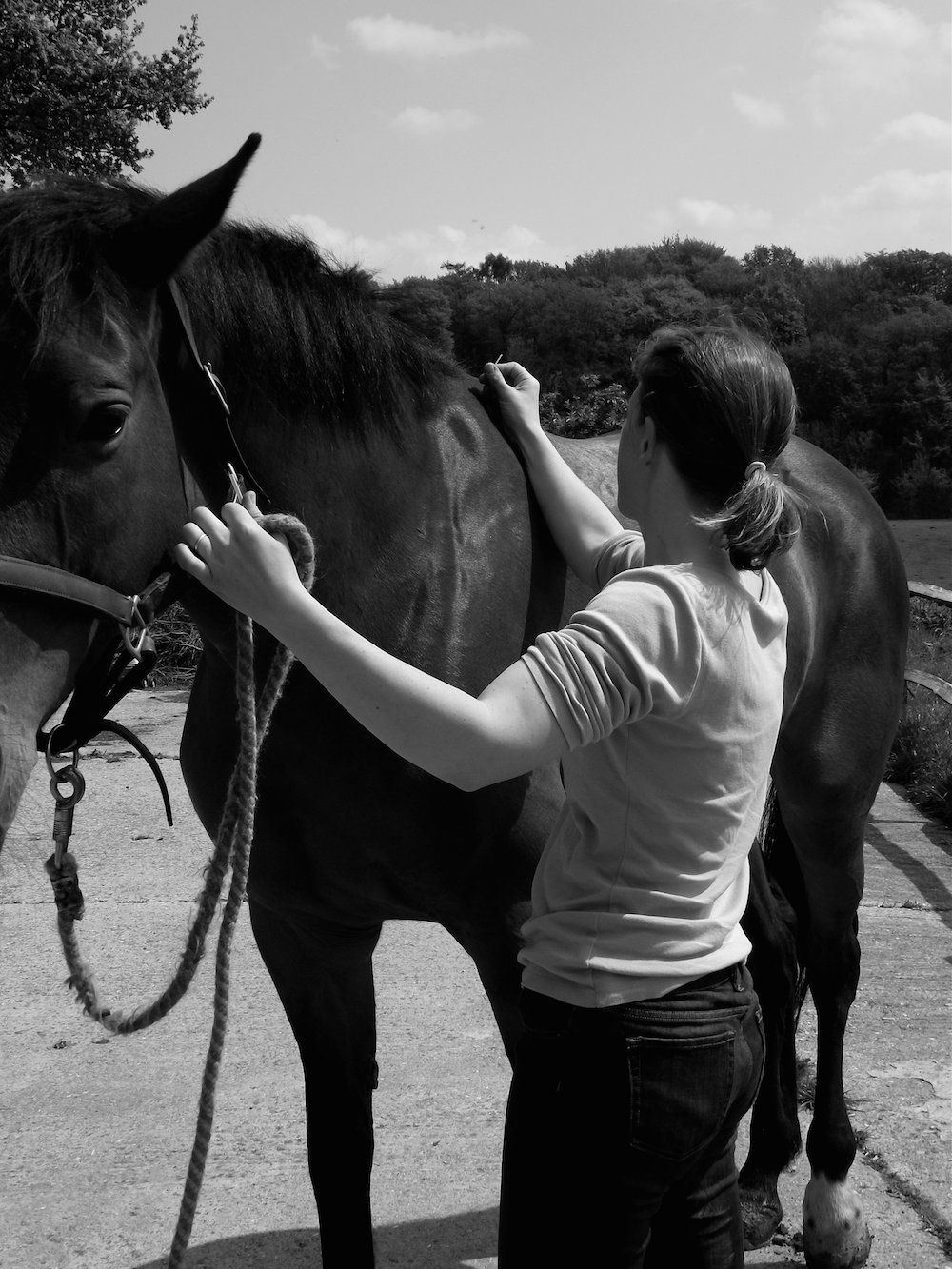

Treating lameness with acupuncture:
Lameness whose cause and localisation cannot be determined by conventional medicine and lameness radiating from the upper areas of the limbs can be successfully treated by acupuncture. Lameness caused by an inflamed joint must first be subjected to conventional joint treatment. Acupuncture can be performed subsequently to restore physiological muscle and ligament functions. Lameness requiring surgical treatment and immobilisation of the horse can be positively supported by acupuncture during the training redevelopment phase.
Treating backache with acupuncture
Treating backache with acupuncture: Acupuncture can be used to treat all kinds of back pain and attendant lameness. For example, horses with muscle tensions arising from intense exertion and who are unable to swing their backs properly or display lameness respond excellently to acupuncture.
This includes disobedience during riding caused by pain.
Acupuncture can be used to treat painful disorders of the musculoskeletal system.
Headshaking
Equine headshaking is primarily caused by trigeminal-mediated headshaking (TMHS), a painful medical condition involving hypersensitivity of the facial nerve, rather than simply bad behavior. While conventional veterinary tests often come back completely clear, clinical research from institutions like the Royal Veterinary College shows that electroacupuncture can significantly improve symptoms in up to 64% of affected horses. By delivering targeted microcurrents to the overactive nerve branches, this therapy helps disrupt the neuropathic pain loop, reduce the frustrating headshaking behavior, and restore full-body relaxation. When paired with environmental tools like nose nets or UV masks, acupuncture offers a highly effective, non-invasive option to vastly improve your horse’s performance, comfort, and quality of life. Chinese herbs add another tool that can significantly change the pattern and improve the allover quality of life with this pattern.
Sacroiliac pain
Sacroiliac pain is one of the most common reasons I am called to a yard. It often shows up as a horse that has become un-level behind, that has started bunny-hopping into canter, or that is simply not pushing from behind the way it was. Acupuncture and chiropractic are usually used together here, alongside a conversation about the saddle and the work the horse is doing.
Sacroiliac (SI) joint pain is a leading cause of hindlimb lameness, poor performance, and behavioral resistance in horses. Located deep where the spine meets the pelvis, this joint is essential for transferring forward power from the hindquarters. Key Signs of SI Dysfunction are and altered gait, canter issues, or just loss of impulsion, just to name a few. For effective management and a successful recovery it requires an integrated approach combining acupuncture, Chinese medicinal herbs and veterinary chiropractic to address deep muscle spasms and compensational mechanisms. Alongside this should be a strict assessment of saddle fit and rider balance and, for a lasting recovery, targeted rehabilitation exercises that focus on building core and hindquarter strength once the underlying inflammation is managed.
What can I expect during treatment?
In the beginning, I will assess the horse in their stable or where it is tied up, to get an idea of its conformation, constitution and muscle distribution. We will talk about the problems you are experiencing, about exercise, feeding, work plan and pattern, training and goals. Usually, I then see the horse moving on the lunge or in hand. This is to assess the movement. We will have a look at the saddle if I feel necessary and answer any other any other questions you or I may have. Usually I proceed with bodywork followed by acupuncture. If I feel it is necessary I will do aqua acupuncture and prescribe Chinese herbal formulas depending on the individual pattern. When acupuncture is finished, which can take between 10 and 20 minutes I like to leave the horse in for a little while, or resting with some hay so they can feel and have some relaxation time. After that I often request them to be moved which can be in hand exercise for 10 to 15 minutes.
What to expect after the treatment?
Usually I let the horses rest for about 10 minutes after the treatment, and then have them in hand walked for 10 to 20 minutes. This is to set the treatment pattern in stone and let the horses experience the looser fascia and different way of moving. For the following couple of days I like the horses worked in a gentle manner. Some horses react very energetically in which case it should be put into constructive work, but not overly hard. It is about channelling the new experienced energy and imprint the looser way of movement. If the horses are rather quiet and tired, I like them to be exercised in a very gentle way, making sure that exercises for elasticity are used to encourage the horses to feel the suppleness. After two to three days the horses can go back into normal work unless recommended different. Usually the horses are seen again 10 to 14 days after the initial treatment, to see what has changed. At that appointment we assess what needs to be worked on further, set in stone what we have achieved and make a plan for future treat- and management. All of the above points will be covered during your appointment though.
Yards we visit
We provide mobile veterinary visits to yards across Kent and the wider South East, regularly serving Ashford, Canterbury, Maidstone, Folkestone, Tenterden, and the surrounding villages. Horses can also be seen at our Great Chart practice by prior arrangement.
For clients further afield, Julia can travel longer distances and spend a full day at your yard if multiple horses require attention. Please note that our call-out fees vary depending on your distance from the clinic, and we will always confirm this amount with you prior to your appointment .
Frequently Asked Questions
Some horses will feel a little prick when the needle is inserted, but usually it is tolerated very well. I ensure that the horses are comfortable with it by desensitising the area manually beforehand. If the horses are too scared or react too much I can use an alternative method which is using a medical laser for the acupuncture. At times I use a combination of both. It is very important for me that the horses trust me and that I don’t lose the trust that I gain from your horse.
I don’t sedate horses for my treatments at Chirovet. Most of them are very happy to be treated and become very relaxed. Some horses may take a little longer than others, however after a few treatments they recognise the benefits and trust me to treat them.
There is no straight answer to this question as every horse’s circumstances and situation are different. At Chirovet, some people see me twice a year, other horses are seen every month for maintenance. It depends on the pattern of the problem as well as if it is a chronic issue or an acute problem. In the beginning the treatments are done close together to see how the horse reacts and for me to get a feel for the response. After that I can usually give an idea and will try to space the appointments out as much as possible but not too much so the patient deteriorates again. I usually give exercises and advice for work in between the appointments to set in stone what we have achieved through the acupuncture for your horse.
The answer very simply is, yes. Acupuncture is a very safe modality. I am a veterinary surgeon who is qualified to perform this treatment. I have years of experience and qualifications in performing my treatments.
As an FEI Permitted Treating Veterinarian (PTV), I’m here to support your horse’s health and your competitive goals every step of the way. Please share your upcoming show dates when you book so we can keep your horse feeling their best while staying fully compliant with FEI regulations.
Yes. Julia visits yards across Kent and the wider South East. For clients further afield, she can travel longer distances. We will always confirm the call out fee with you prior to your appointment.